
-p-1080.webp)






Does Setting Service Areas in Local SEO Actually Impact Your Rankings?
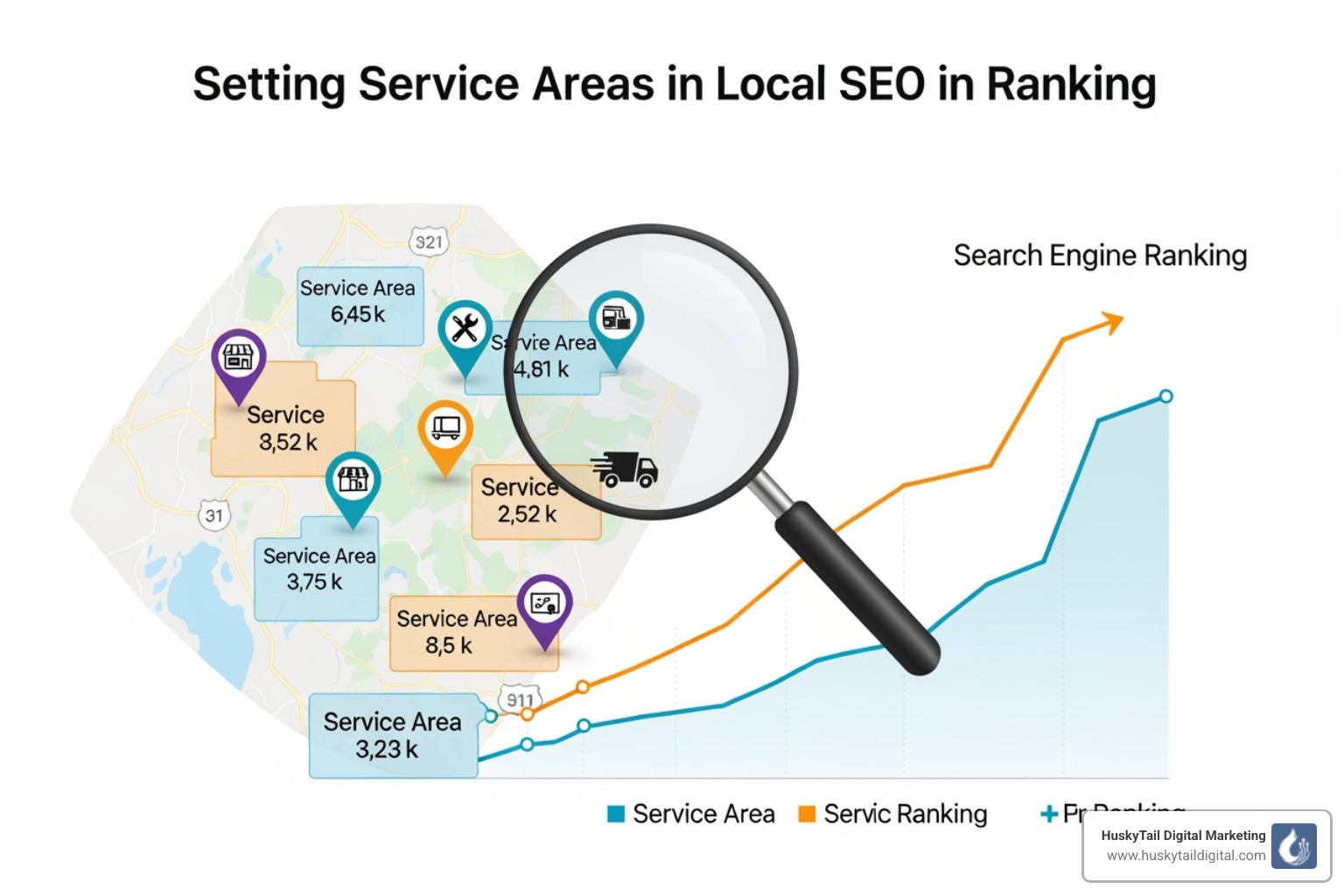
Can setting service areas in local SEO impact ranking is one of the most debated questions in local search — and the short answer might surprise you:
No. Service areas do not directly impact your local search rankings.
Here's what the research actually shows:
| What You Might Think | What Actually Happens |
|---|---|
| Adding more service areas boosts rankings | No ranking change observed |
| Larger service area = more visibility | Service areas filter eligibility, not position |
| Removing service areas drops rankings | No ranking impact when removed |
| Service areas replace proximity signals | Your verification address drives proximity |
Service areas act as a geographic eligibility filter — they determine where your business can appear, not how high it ranks. That's a critical distinction most business owners (and even some SEOs) get wrong.
The confusion is understandable. In 2023, respected local SEO expert Darren Shaw of Whitespark publicly stated he believed service areas did impact rankings — only to revise that position after further testing. His controlled experiments showed that removing service areas entirely had no impact on rankings whatsoever. Joy Hawkins of Sterling Sky had been saying this all along. The real culprit behind the ranking shifts both camps observed? Whether the business address was hidden or visible — not the service areas themselves.
So if you've been obsessing over your service area settings, hoping they'll push you up the local pack — there's a better place to put that energy.
I'm Stephen Gardner, founder of HuskyTail Digital Marketing and a local SEO strategist with over 20 years of experience helping businesses understand exactly what moves the needle in local search — including the nuanced question of can setting service areas in local SEO impact ranking for service-area businesses operating without a public storefront. In the sections ahead, I'll walk you through what actually drives your local rankings, what to fix first, and how to stop chasing the wrong signals.
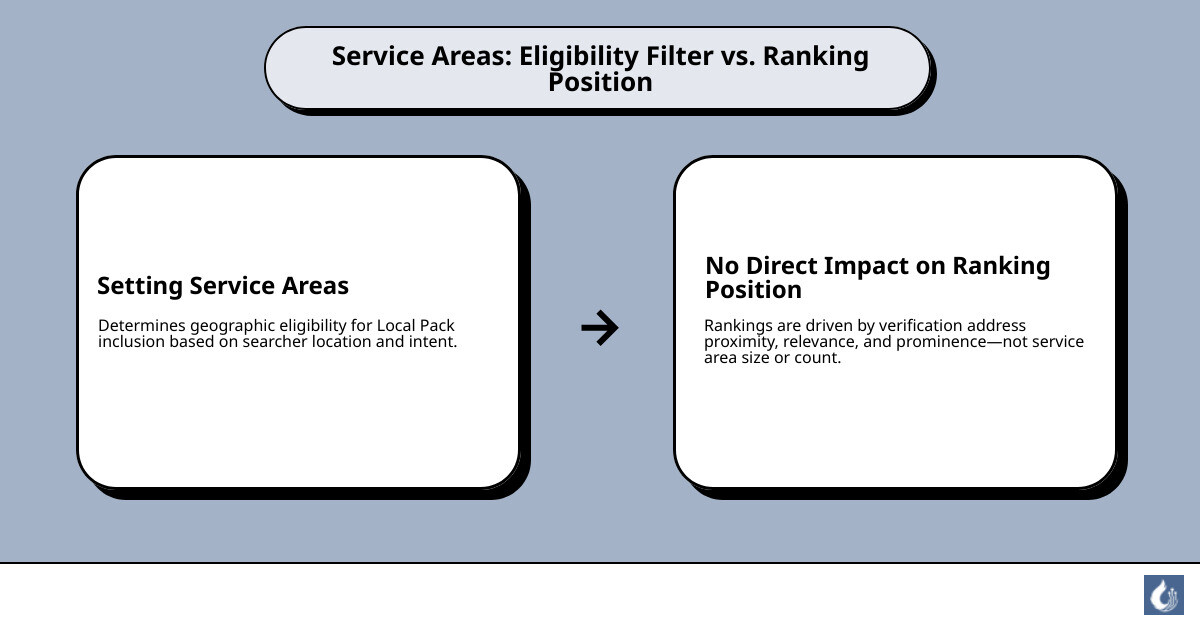
Can setting service areas in local seo impact ranking terms at a glance:
The Truth: Can Setting Service Areas in Local SEO Impact Ranking?
At HuskyTail Digital Marketing, we believe in data-backed decisions. When we look at the evidence regarding whether can setting service areas in local seo impact ranking, the consensus among industry titans is clear: service areas are a qualifier, not a differentiator.
If you are a plumber in Austin or an HVAC technician in Chicago, you might feel tempted to list every single suburb and zip code in your Google Business Profile (GBP) to "spread the wealth." However, extensive testing by agencies like Sterling Sky and Whitespark has debunked this. In one specific experiment, Darren Shaw removed all service areas from a profile and saw absolutely zero change in rankings. The business continued to rank exactly where it did before.
So, what is actually happening? Service areas are essentially a "permit" to show up. If you don't list Dallas as a service area, Google might not show you to users in Dallas. But listing it doesn't give you a "boost" over the competitor who is physically closer to the searcher.
Why setting service areas in local seo impact ranking eligibility but not position
Think of service areas like a guest list for a party. Being on the list (setting the service area) gets you through the door (eligibility). However, once you're inside, your "popularity" (ranking position) is determined by other factors like your reputation, how many people know you, and how close you are to the host.
Google uses these settings to understand your geographic relevance. If a user in Miami searches for "mobile pet grooming," Google checks which businesses have claimed Miami as a service area. This is a binary filter. Once the filter is applied, the algorithm reverts to its core pillars: Proximity, Relevance, and Prominence.
The role of the verification address when setting service areas in local seo impact ranking
This is the "secret sauce" that many business owners miss. Even if you hide your address because you are a Service Area Business (SAB), Google still knows where you are. Your rankings are anchored to the original verification address—the physical place where you received that Google postcard.
For businesses in sprawling metros like Houston or Phoenix, this is vital. If you verified your business at a home office in the northern suburbs but set your service area to include the entire city, you will likely rank very well near your home and progressively worse as you move toward the southern suburbs. Google’s official guidelines for SAB listings confirm that proximity is calculated from this hidden center point. You cannot simply "move" your ranking power by changing your service area settings.
The Proximity Paradox: Hiding vs. Showing Your Address
One of the most fascinating discoveries in recent local SEO research is how address visibility affects your "ranking bubble." We often see that the decision to hide or show an address has a much larger impact than the service areas themselves.
| Feature | Visible Address (Storefront) | Hidden Address (SAB) |
|---|---|---|
| Ranking Radius | Tighter, more concentrated | Expanded, but often less "intense" |
| Proximity Advantage | High (Strongest near the pin) | Moderate (Calculated from hidden pin) |
| Trust Signals | Higher (Physical location verified) | Variable (Relies more on reviews/content) |
| Search Eligibility | Localized to physical proximity | Flexible across defined service areas |
Research confirms hiding address impact can actually expand your ranking radius in some cases, while showing it anchors you more firmly to a specific spot.
Impact on Service Area Businesses (SABs)
If you’re a mobile service provider in Atlanta or Denver, you likely operate as a pure SAB. When you hide your address, you lose the "proximity boost" that a storefront gets. However, you gain the ability to signal to Google that you are mobile.
The "Proximity Paradox" suggests that while storefronts rank incredibly well within a 1-2 mile radius, SABs with hidden addresses might see their visibility spread more thinly across a 5-10 mile radius. This is why it’s so important to have a strong Local SEO Guide for Businesses to follow; you need to compensate for that lost proximity boost with other signals.
Impact on Storefront Businesses
For businesses in Boston or Philadelphia that have a physical shop, showing your address is almost always the right move. It creates a strong "relevance anchor." Google rewards physical locations because they represent a permanent, verifiable entity. If you have a storefront but also serve a wide area (a "hybrid" business), showing your address typically results in a much higher ranking for the immediate neighborhood compared to hiding it.
How to Optimize for Rankings Beyond the Service Area Settings
Since we've established that the GBP service area box isn't a ranking magic wand, how do we actually improve our reach in cities like San Diego or Tampa? The answer lies in your website and your broader digital footprint.
Building Geographic Relevance Signals
To rank in multiple areas, you need to prove to Google that you actually do work there.
- Review Location Mentions: Encourage your customers in Charlotte or Las Vegas to mention their neighborhood in their reviews. A review that says, "Great service in Summerlin!" is worth its weight in gold for ranking in that specific part of Las Vegas.
- NAP Consistency: Ensure your Name, Address, and Phone number are consistent across all local seo services and directories.
- Hyperlocal Content: Write about local events or common issues in the cities you serve. If you're an HVAC company in Chicago, write a guide on "How to Prep Your Pipes for a Windy City Winter."
Technical On-Page Optimization for SABs
Your website is where you can truly expand your territory. We recommend creating "Service Area Pages" (SAPs). These are dedicated landing pages for each major city or neighborhood you serve.
- LocalBusiness Schema: Use structured data to tell Google exactly which areas you serve.
- Unique Content: Avoid "doorway pages" where you just swap the city name. Each page should have unique testimonials, local landmarks, and specific service details for that area.
- Embedded Maps: Embed a Google Map on these pages to reinforce the geographic connection.
For a deeper dive, check out this guide on how to create a perfect location page.
Common Mistakes When Configuring Your Service Area
We see the same errors over and over again when auditing profiles for businesses in Los Angeles or New York.
The Danger of Geographic Overextension
It is tempting to set a 100-mile radius around your base in Orlando. However, Google’s algorithms are smarter than that. If you claim to serve a massive area but all your reviews come from one tiny corner of San Francisco, Google will view your claims as untrustworthy.
Google's update on doorway pages warns against creating low-quality pages just to capture search traffic in different areas. Overextending your service area can actually dilute your relevance, making you rank worse everywhere instead of better in more places. Stick to a realistic 2-hour driving radius or about 50 miles from your base.
Verification and Address Issues
- P.O. Boxes and Virtual Offices: These are a one-way ticket to suspension. Google requires a physical location for verification.
- Moving Locations: If you move your home office from one side of Dallas to the other, you must update your address. Even if it's hidden, the "ranking anchor" needs to be accurate.
- The "Verification Ghost": If you verified your business years ago at an old address and then hid it, you are still ranking based on that old spot. We often find businesses "ghosting" their own rankings because they haven't updated their hidden verification address.
Measuring Success: Tracking Your Local Reach
You can't fix what you don't measure. For SABs in competitive markets like Phoenix or Miami, standard rank trackers aren't enough.
Key Metrics for Service Area Businesses
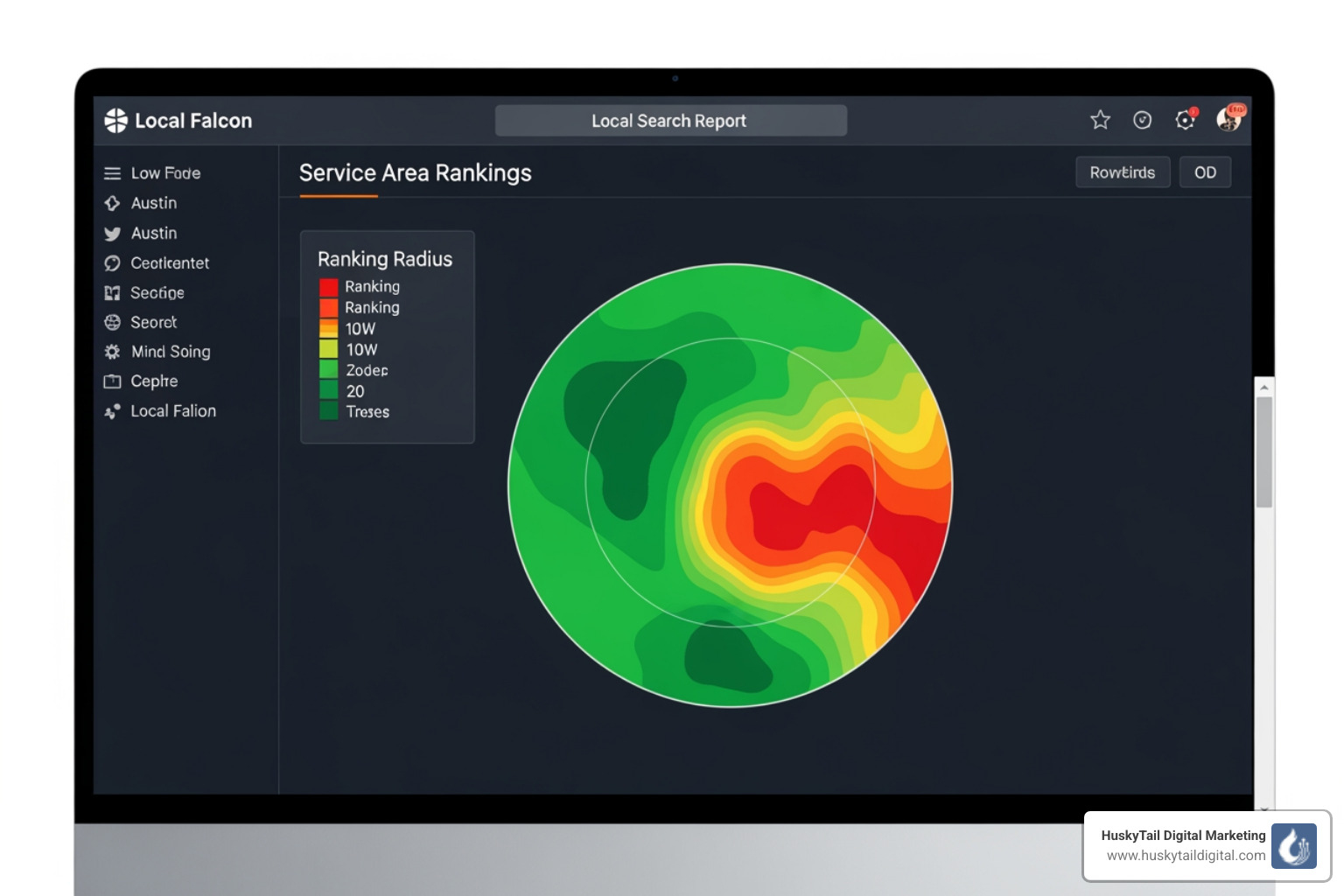
- Geo-Grid Tracking: Use tools like Local Falcon to see exactly where your "ranking bubble" starts and ends. This helps you visualize the impact of your Local Map Pack Optimization efforts.
- GBP Insights: Look at where your "Direction Requests" are coming from (even if you're an SAB, this data is often aggregated by zip code).
- Conversion by Zip: Track which service area pages on your website are actually generating leads.
Adjusting Strategy Based on Data
We recommend a quarterly review of your local performance. If you find you are ranking well in New York but struggling in nearby Brooklyn, it’s time to double down on localized content and reviews from that specific area. At HuskyTail Digital Marketing, we use AI-powered analysis to identify these gaps and adjust your strategy in real-time.
Frequently Asked Questions about Service Area Rankings
Do more service areas help me rank in more cities?
No. Adding more cities to the "Service Area" section of your GBP does not increase your ranking power in those cities. It only makes you eligible to show up. To actually rank, you need localized content, reviews from those areas, and strong organic SEO signals.
Does hiding my address hurt my local SEO?
It doesn't "hurt" it in terms of a penalty, but it does change the way proximity is calculated. You lose the intense proximity boost that storefronts get, but you may see your visibility spread across a slightly wider (though potentially lower-ranking) radius.
How long does it take for service area changes to take effect?
Usually, you’ll see eligibility changes within 2-4 weeks. However, the full impact of a local SEO strategy—including building Service Area Pages and gathering reviews—typically takes 3-6 months to fully mature.
Conclusion
At HuskyTail Digital Marketing, we know that local SEO can feel like a moving target. The question of can setting service areas in local seo impact ranking is a perfect example of how "common sense" in marketing doesn't always align with Google's complex algorithms.
While the service area setting in your profile is a necessary housekeeping task, it isn't the engine that drives your growth. Real growth comes from data-backed results, high-quality localized content, and a stellar reputation. We specialize in helping businesses across the United States—from Atlanta to San Francisco—navigate these nuances with our AI-powered SEO and website management.
Beyond just rankings, we are a company with a heart. Our Hearts for Huskies initiative https://www.huskytaildigital.com/hearts-for-huskies combines our passion for marketing with our love for animals, ensuring that as your business grows, we’re also giving back to huskies in need.
If you're ready to stop guessing and start leading, explore our Local SEO services today.
At HuskyTail Digital Marketing - We Don't Follow the Pack, We Lead the Herd.


.avif)

.webp)
.avif)


